Disfarmer, 1939-1946 (First Edition, Limited)
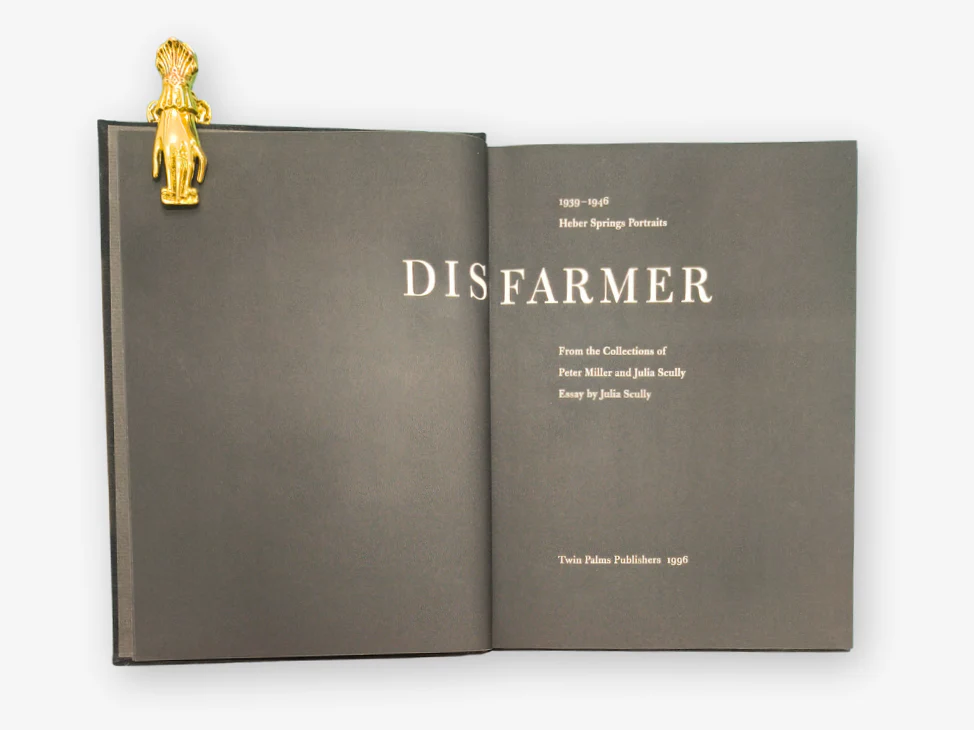
DISFARMER, Mike (text Julia Scully; ed. & designed Jack Woody). Disfarmer: Heber Springs Portraits, 1939–1946. Santa Fe, New Mexico: Twin Palms Publishers, 1996.
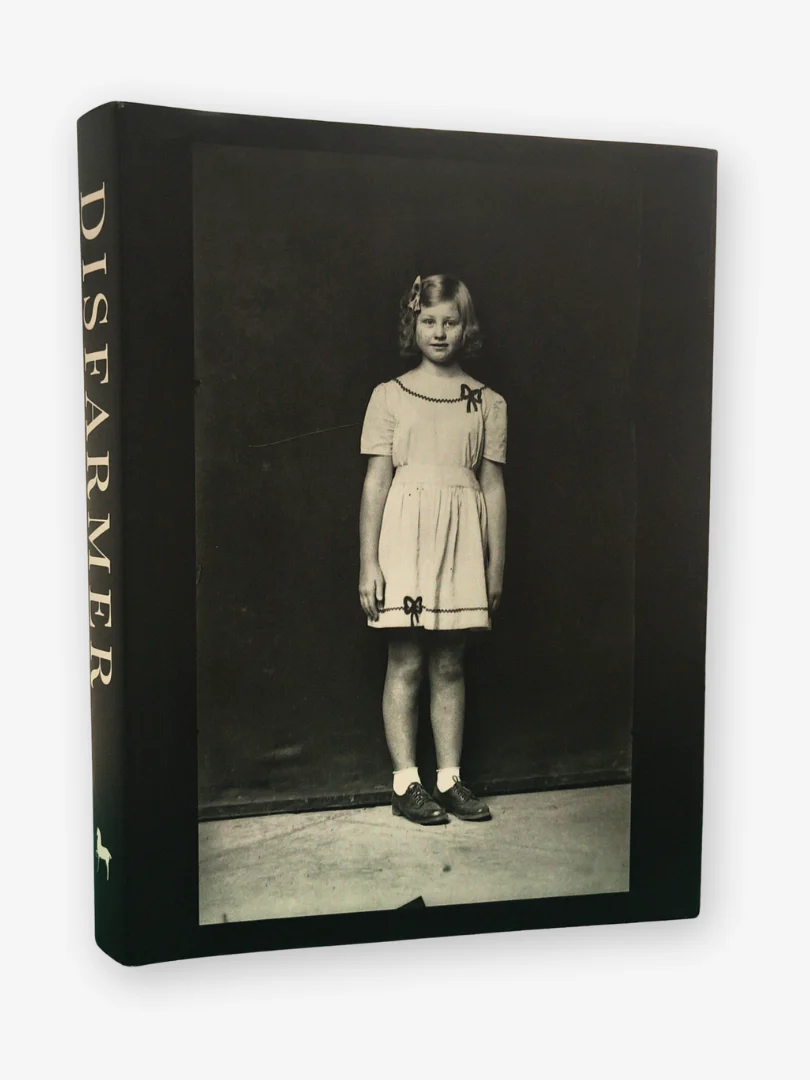
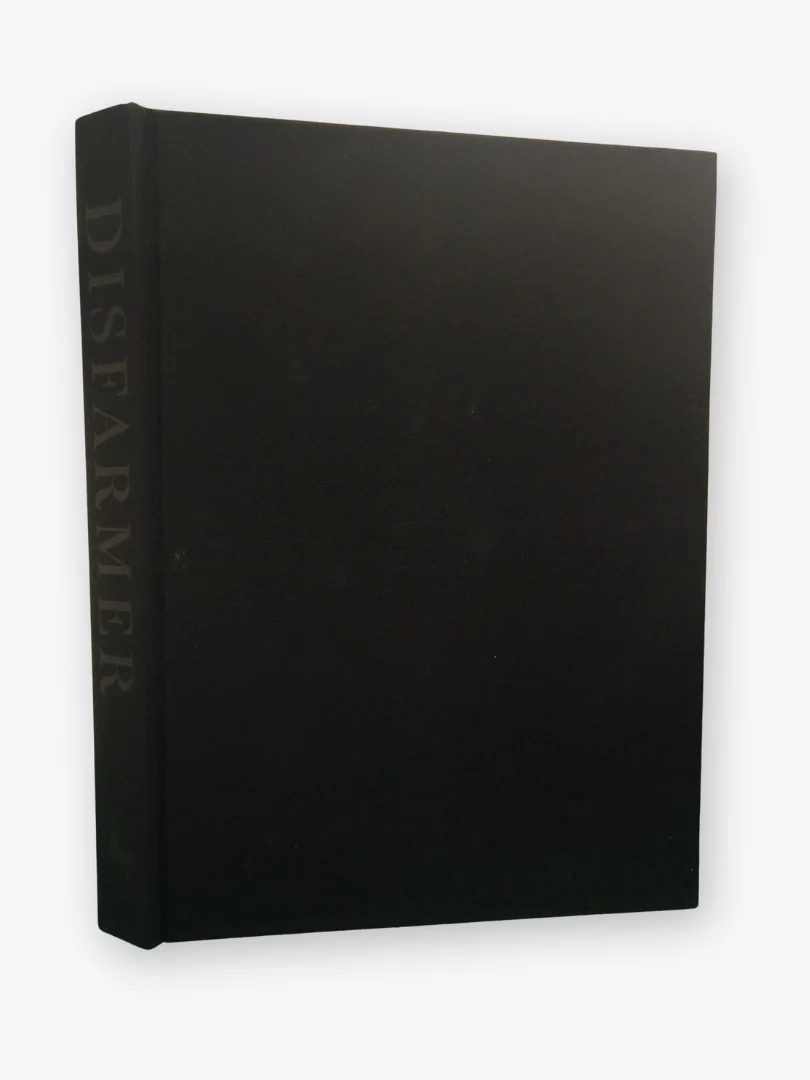
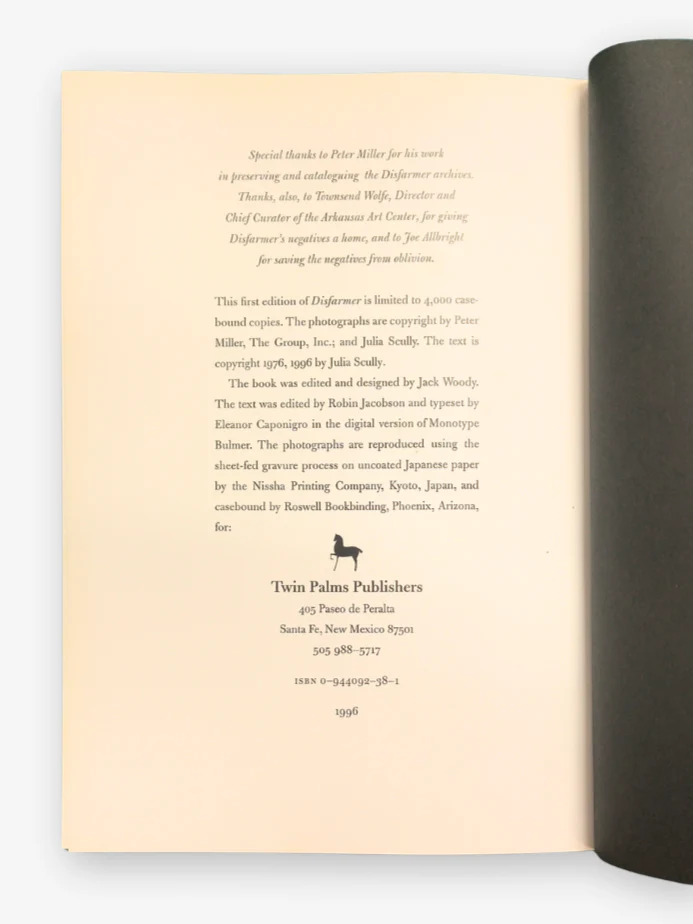
Small Quarto. Original black publisher's cloth, lettered in white. Pictorial dust jacket. 206, [i] pp. 180 gravure plates. Printed on a sheet-fed gravure press in Kyoto. First edition. Limited to 4,000 unnumbered copies.
Mike Disfarmer (1884–1959) was born Mike Meyer in Indiana, the son of German immigrants, and moved with his family to Arkansas in 1892. At some point in middle age he changed his surname — meier being an archaic German term for farmer, Disfarmer a direct repudiation of the name and presumably the identity — and settled in the small town of Heber Springs, where he built a modest studio with a large north-facing window and operated it as a commercial photographer for four decades. He charged fifty cents for three prints, did not coax his subjects into smiling, provided no props or painted backdrops, and lit everything with natural light. He died alone in his studio in 1959, in possession of thousands of glass-plate negatives, intestate and unrecognised.
The negatives were purchased by a former Heber Springs mayor, who in 1973 brought them to the attention of Peter Miller, then editor of the local newspaper. Miller spent a year publishing the portraits in his paper and preserving the glass plates; he sent prints to Julia Scully at Modern Photography magazine, who immediately understood their significance. The first publication of Disfarmer's work followed in 1976. The 1996 Twin Palms edition, edited and designed by Jack Woody and produced with 180 gravure plates printed in Kyoto, drew on a wider selection of the surviving negatives to produce what became the standard monograph on the work.
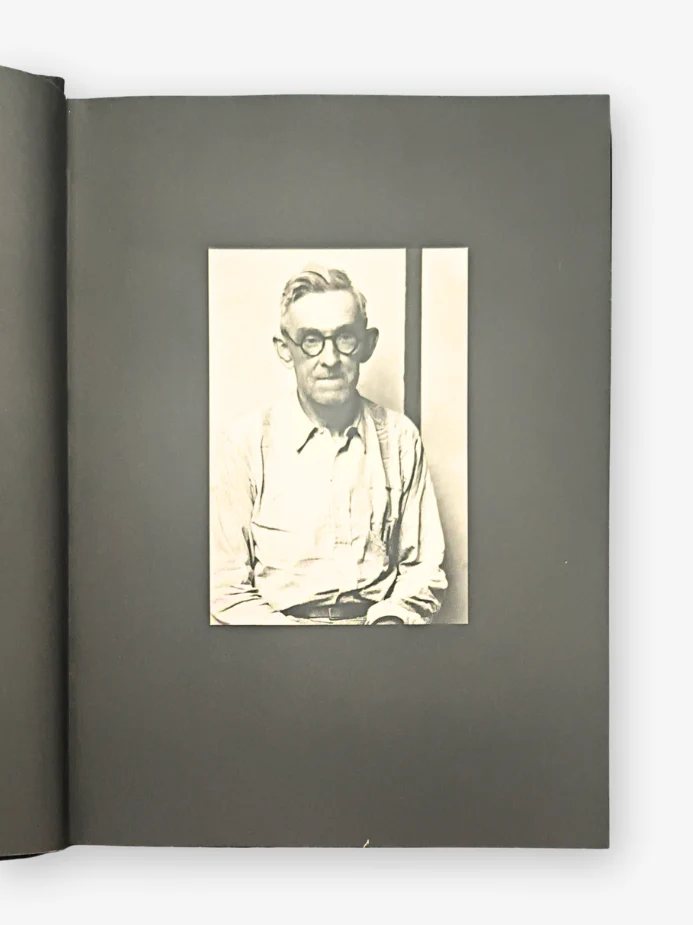
What makes Disfarmer's photographs extraordinary is precisely their resistance to artfulness. His sitters — cotton farmers, soldiers home on leave, mothers with children, courting couples, tradesmen, labourers — presented themselves to the camera without the mediation of professional stagecraft, and Disfarmer recorded them with the same directness. The results are among the most psychologically immediate portrait photographs in American art: confrontational in their plainness, quietly monumental, and possessed of an honesty that implicates the viewer. The comparison to August Sander is apt, and the comparison to Diane Arbus less so but often made. The book was selected as one of the best photography books of 1996 by the New York Times Book Review.
Fine in very good dust jacket. A beautiful copy, albeit for some very minor markings to jacket faces (almost imperceptible) and some foxing to inner faces, presents fine and in good order.
This book is currently not on display in store. If you would like more information or to arrange a viewing, please contact: [email protected]
Catalogue Number: HH000268
Description
DISFARMER, Mike (text Julia Scully; ed. & designed Jack Woody). Disfarmer: Heber Springs Portraits, 1939–1946. Santa Fe, New Mexico: Twin Palms Publishers, 1996.
Small Quarto. Original black publisher's cloth, lettered in white. Pictorial dust jacket. 206, [i] pp. 180 gravure plates. Printed on a sheet-fed gravure press in Kyoto. First edition. Limited to 4,000 unnumbered copies.
Mike Disfarmer (1884–1959) was born Mike Meyer in Indiana, the son of German immigrants, and moved with his family to Arkansas in 1892. At some point in middle age he changed his surname — meier being an archaic German term for farmer, Disfarmer a direct repudiation of the name and presumably the identity — and settled in the small town of Heber Springs, where he built a modest studio with a large north-facing window and operated it as a commercial photographer for four decades. He charged fifty cents for three prints, did not coax his subjects into smiling, provided no props or painted backdrops, and lit everything with natural light. He died alone in his studio in 1959, in possession of thousands of glass-plate negatives, intestate and unrecognised.
The negatives were purchased by a former Heber Springs mayor, who in 1973 brought them to the attention of Peter Miller, then editor of the local newspaper. Miller spent a year publishing the portraits in his paper and preserving the glass plates; he sent prints to Julia Scully at Modern Photography magazine, who immediately understood their significance. The first publication of Disfarmer's work followed in 1976. The 1996 Twin Palms edition, edited and designed by Jack Woody and produced with 180 gravure plates printed in Kyoto, drew on a wider selection of the surviving negatives to produce what became the standard monograph on the work.
What makes Disfarmer's photographs extraordinary is precisely their resistance to artfulness. His sitters — cotton farmers, soldiers home on leave, mothers with children, courting couples, tradesmen, labourers — presented themselves to the camera without the mediation of professional stagecraft, and Disfarmer recorded them with the same directness. The results are among the most psychologically immediate portrait photographs in American art: confrontational in their plainness, quietly monumental, and possessed of an honesty that implicates the viewer. The comparison to August Sander is apt, and the comparison to Diane Arbus less so but often made. The book was selected as one of the best photography books of 1996 by the New York Times Book Review.
Fine in very good dust jacket. A beautiful copy, albeit for some very minor markings to jacket faces (almost imperceptible) and some foxing to inner faces, presents fine and in good order.
This book is currently not on display in store. If you would like more information or to arrange a viewing, please contact: [email protected]
Catalogue Number: HH000268