Plague Fighter (First Edition)
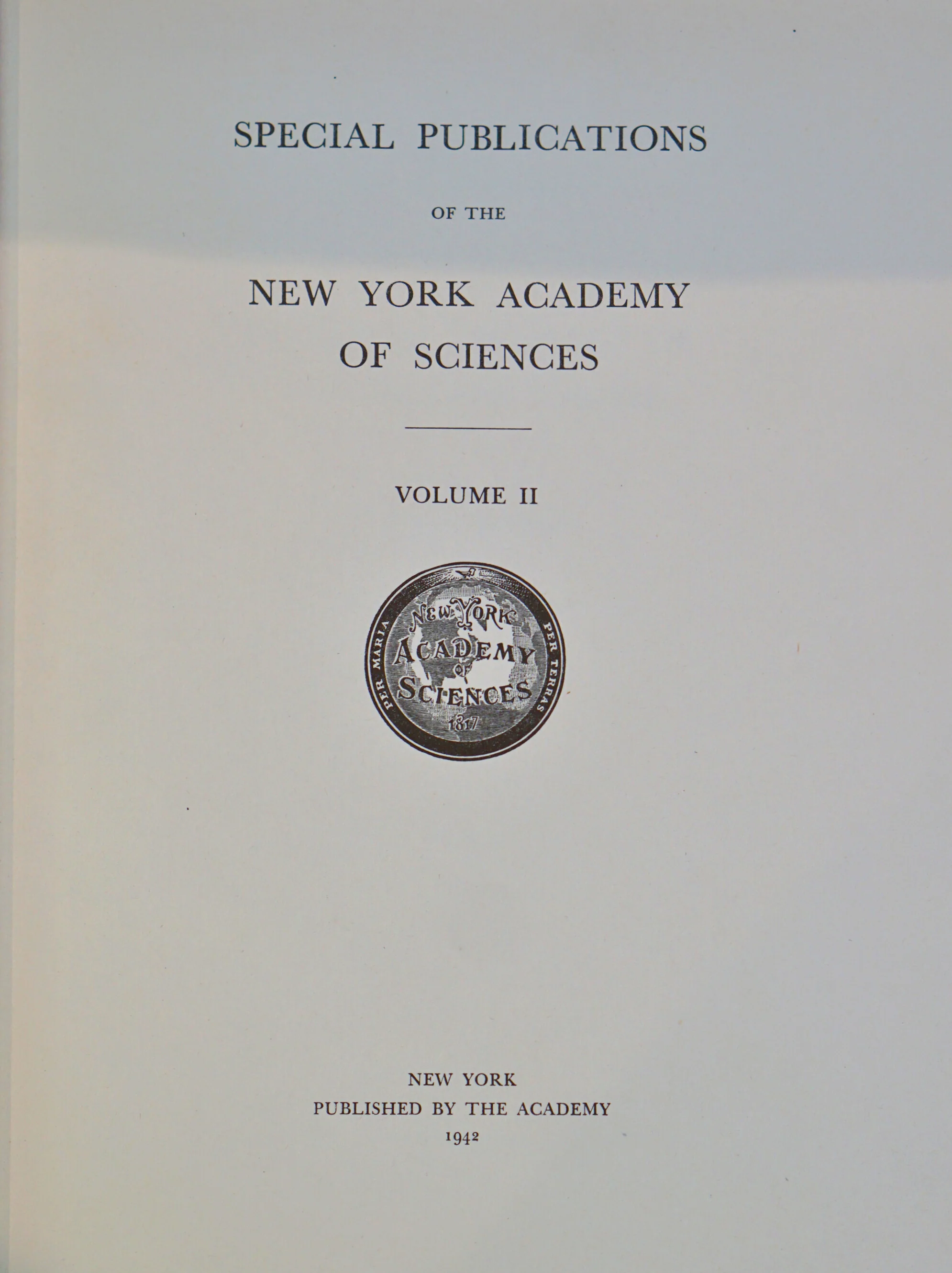
WU LIEN-TEH. Plague Fighter: The Autobiography of a Modern Chinese Physician. Cambridge: W. Heffer & Sons, 1959.
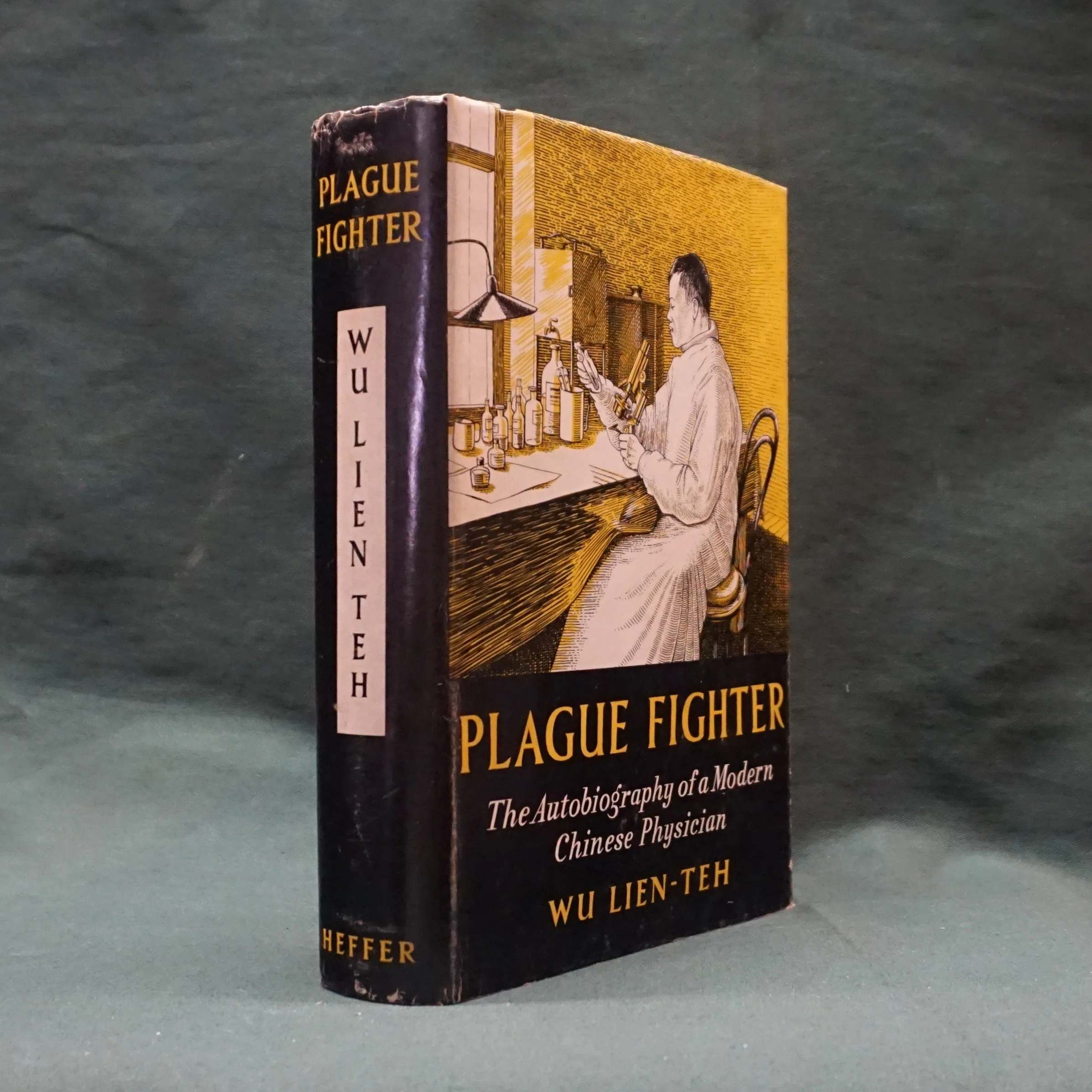
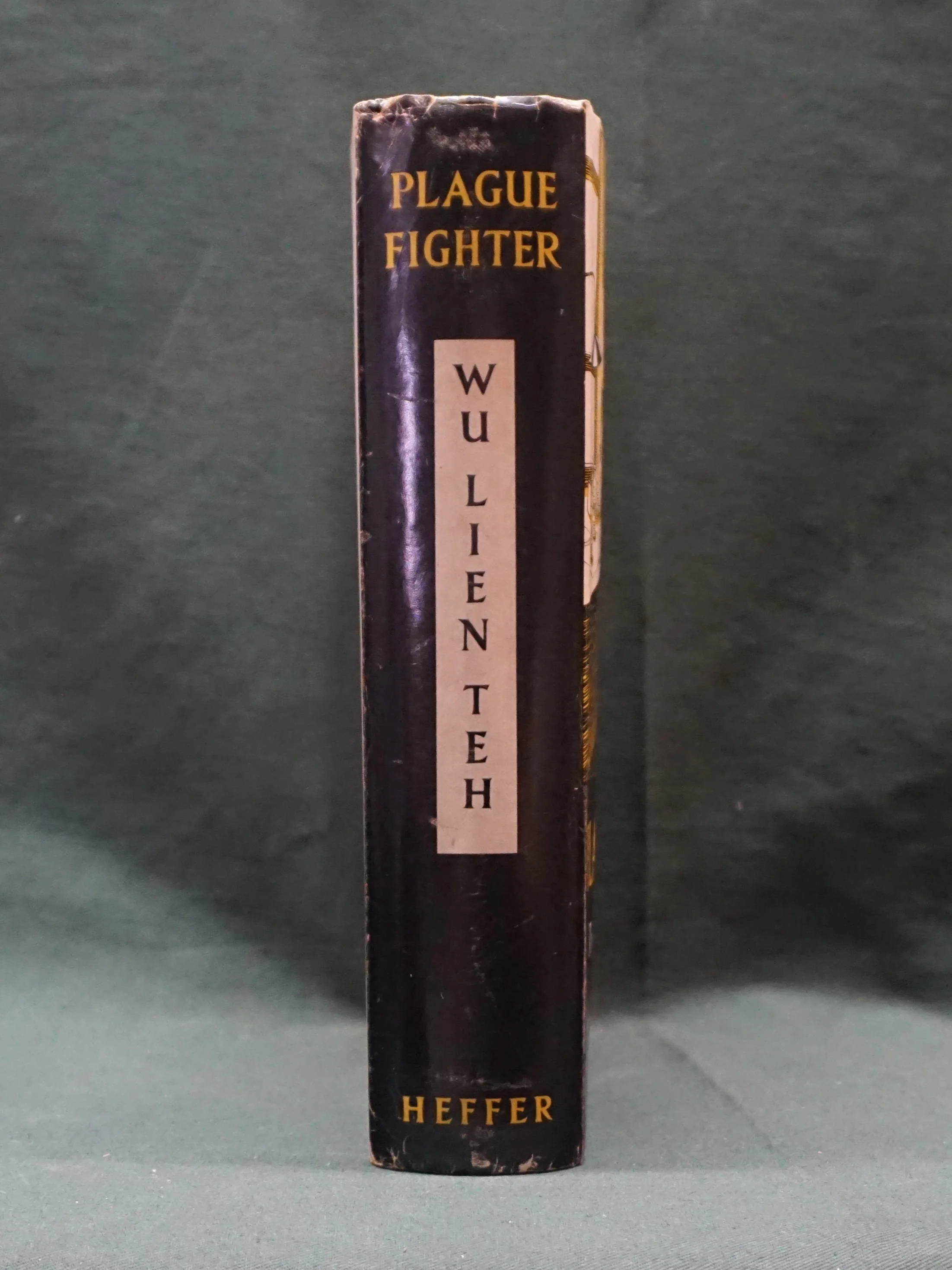
Thick Octavo. Original blue publisher's cloth. Gilt lettering to spine. Clipped pictorial dust jacket, the illustration showing the author working in his plague laboratory in January 1911. x, 667 pp., with photographic frontispiece of the author (1956) and illustrations throughout. First edition.
Wu Lien-teh (1879–1960) was born in Penang of Chinese descent, won a Queen's Scholarship, and went up to Emmanuel College, Cambridge, in 1896 as the first medical student of Chinese origin at the university. He returned to Asia a qualified physician, and in the winter of 1910 was dispatched to Manchuria to confront a rapidly spreading pneumonic plague epidemic that had already killed tens of thousands and showed no signs of abating. He was thirty-one years old.
What he accomplished there was one of the most significant acts in the history of public health. Working against both the epidemic and the scepticism of foreign-trained doctors who doubted his methods, Wu Lien-teh arrived at conclusions that would become foundational to pandemic medicine: that pneumonic plague was spread by respiratory droplets, not by rat fleas; that the essential interventions were the use of protective masks and the isolation of infected individuals; and that mass cremation of the unburied dead was a necessary step in breaking the chain of transmission. He ordered and oversaw the cremation of over three thousand corpses that had been lying frozen on the ground. The death rate fell immediately. Within four months the epidemic was over. Wu Lien-teh had contained a plague that had threatened to spread across Asia and into Europe, and he had done it with tools that would become the basic infrastructure of every subsequent pandemic response, including those of 1918 and 2020.
He went on to establish the Manchurian Plague Prevention Service, build twenty modern hospitals and research institutions across China, co-author the acclaimed History of Chinese Medicine (1932), and in 1935 become the first Chinese physician nominated for the Nobel Prize in Medicine. Plague Fighter, written in his final years at the urging of Joseph Needham and published the year before his death, is arranged thematically rather than purely chronologically and encompasses an extraordinary range of material. First editions are scarce.
Very good in like dust jacket. Jacket price-clipped; some rubbing to edges. Age toning to cloth boards at edges. Contents in excellent condition with some foxing along edges. Ex-libris ink stamps and seller sticker to front endpapers.
This book is currently not on display in store. If you would like more information or to arrange a viewing, please contact: [email protected]
Catalogue Number: HH000129


Description
WU LIEN-TEH. Plague Fighter: The Autobiography of a Modern Chinese Physician. Cambridge: W. Heffer & Sons, 1959.
Thick Octavo. Original blue publisher's cloth. Gilt lettering to spine. Clipped pictorial dust jacket, the illustration showing the author working in his plague laboratory in January 1911. x, 667 pp., with photographic frontispiece of the author (1956) and illustrations throughout. First edition.
Wu Lien-teh (1879–1960) was born in Penang of Chinese descent, won a Queen's Scholarship, and went up to Emmanuel College, Cambridge, in 1896 as the first medical student of Chinese origin at the university. He returned to Asia a qualified physician, and in the winter of 1910 was dispatched to Manchuria to confront a rapidly spreading pneumonic plague epidemic that had already killed tens of thousands and showed no signs of abating. He was thirty-one years old.
What he accomplished there was one of the most significant acts in the history of public health. Working against both the epidemic and the scepticism of foreign-trained doctors who doubted his methods, Wu Lien-teh arrived at conclusions that would become foundational to pandemic medicine: that pneumonic plague was spread by respiratory droplets, not by rat fleas; that the essential interventions were the use of protective masks and the isolation of infected individuals; and that mass cremation of the unburied dead was a necessary step in breaking the chain of transmission. He ordered and oversaw the cremation of over three thousand corpses that had been lying frozen on the ground. The death rate fell immediately. Within four months the epidemic was over. Wu Lien-teh had contained a plague that had threatened to spread across Asia and into Europe, and he had done it with tools that would become the basic infrastructure of every subsequent pandemic response, including those of 1918 and 2020.
He went on to establish the Manchurian Plague Prevention Service, build twenty modern hospitals and research institutions across China, co-author the acclaimed History of Chinese Medicine (1932), and in 1935 become the first Chinese physician nominated for the Nobel Prize in Medicine. Plague Fighter, written in his final years at the urging of Joseph Needham and published the year before his death, is arranged thematically rather than purely chronologically and encompasses an extraordinary range of material. First editions are scarce.
Very good in like dust jacket. Jacket price-clipped; some rubbing to edges. Age toning to cloth boards at edges. Contents in excellent condition with some foxing along edges. Ex-libris ink stamps and seller sticker to front endpapers.
This book is currently not on display in store. If you would like more information or to arrange a viewing, please contact: [email protected]
Catalogue Number: HH000129